


What I’ve Learned About DeepSeek Harness
KDnuggets team member Shittu Olumide tested out DeepSeek Harness. Here's what he found.
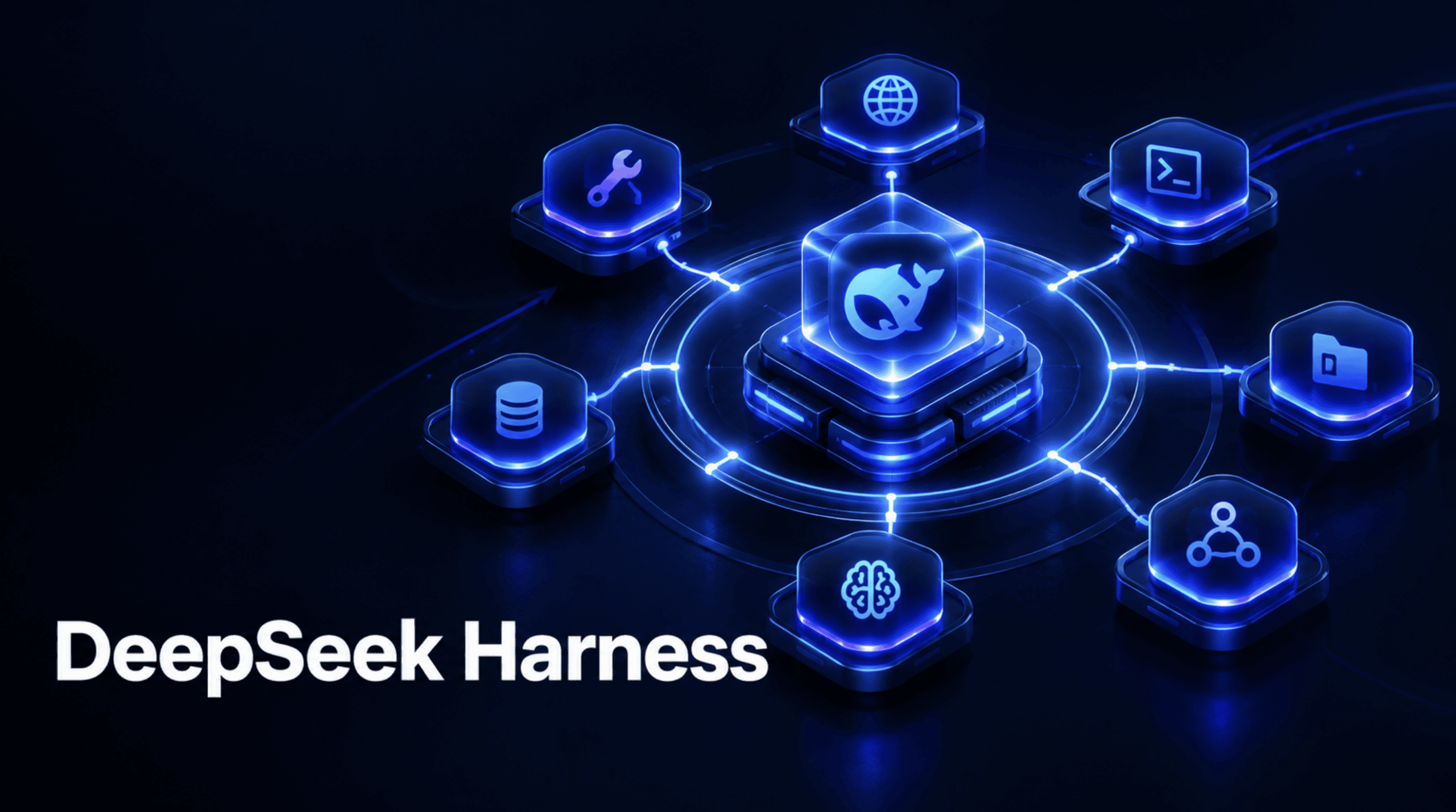
On August 13, 2026, DeepSeek quietly open-sourced an agent runtime called DeepSeek Harness, CLI name dsh, and the reaction wasn't quiet at all. The repository picked up roughly 50,000 stars in its first twelve hours, around 92,000 by hour twenty-eight, and had passed 186,000 stars with over 20,000 forks within ten days. That's an unusual velocity even by AI-tooling standards, and it's worth understanding what actually earned it, since the honest answer isn't "a better coding agent."
What's the Buzz About DeepSeek Harness?
The central claim, repeated everywhere DeepSeek describes this project, is that literally every layer of an agent is a plugin: the model adapter, the tool registry, the session log, the sandbox, the UI, and even the agent loop itself. It's built on Cordis, a plugin framework with a real production track record — four years running inside the Koishi chatbot project before DeepSeek adopted it here, not a framework invented for this launch. The design itself is documented in a real paper, A Programming Paradigm for Spatiotemporal Composability, which is more academic grounding than most agent tooling launches bother to publish.
A few specifics that matter:
- It's model-agnostic across roughly 40 providers, and a sub-agent can reportedly be delegated to a competitor's agent entirely — not locked to DeepSeek's own models.
- Sandboxing is real OS-level isolation rather than a soft convention: bwrap (Linux's Bubblewrap, the same sandboxing primitive Flatpak apps run in) and Landlock on Linux, Seatbelt (Apple's own sandbox framework) on macOS, restricted ACL tokens on Windows — fail-closed by default rather than fail-open.
- Session logs are append-only with a runtime-enforced rule: if the model saw it, it's logged — no silent context. And the project is loudly upfront about what it isn't yet. The README's own words are "developer preview" and "THERE WILL BE COMPATIBILITY-BREAKING CHANGES," which is a rare amount of honesty for a project this hyped.
Let's put this plainly: this isn't a coding agent you point at a repository and use today. It's the machinery a coding agent gets assembled from.
This isn't DeepSeek's first time choosing open infrastructure over a walled garden either, and that history is worth a beat. DeepSeek-R1 landed in January 2025 as the first open, MIT-licensed frontier-class reasoning model from outside the usual US labs, trained for a fraction of what comparable Western models cost, and it reset a lot of assumptions about who gets to ship frontier AI in the open. Harness reads like the same instinct applied one layer up the stack: instead of open weights alone, open agent infrastructure, published at the same time as the announcement rather than teased ahead of it.
What I Found When I Ran It
Since it ships as a real npm package, you can install directly:
npx --yes @deepseek-ai/dsh --versionThat returned 0.1.5-rc.2, matching the version history on the project's actual GitHub releases page, confirming this was a genuine, current install. Here's what the real help output actually shows:
Commands:
  web [options] [args...]        boot the web profile (alias of --profile web)
  plugin [options] [args...]     manage a profile's plugins by forwarding the
                                  remaining arguments to pnpm in the profile
                                  directory

Examples:
  dsh --profile web                          boot the web profile (same as: dsh web)
  dsh --profile headless "run the tests"     answer one task, print the result, and exit
  dsh --profile tui --patch ./extra.yml      boot a custom profile with one extra overlay
  dsh plugin --profile tui add      install a plugin into the tui profile
--profile web boots the browser UI, --profile headless answers one task and exits, and there's also tui and rescue profiles — each one just a different stack of mounted plugins under the same launcher. dsh plugin add treats installing a new capability as an ordinary package install rather than a special, separate mechanism.
The most concrete thing I found came from one flag: --dump-default-config, which prints the entire composed plugin tree for a profile before it boots. Running it against the default web profile printed 152 separately named, independently swappable plugins. A representative slice of the actual output:
- id: ui-approval
  name: '@deepseek-ai/dsh-client-ui-approval'
- id: ui-subagent
  name: '@deepseek-ai/dsh-client-ui-subagent'
- id: ui-schedule
  name: '@deepseek-ai/dsh-client-ui-schedule'
  disabled: true
- id: ui-plan
  name: '@deepseek-ai/dsh-client-ui-plan'
- id: agent-presets
  name: '@deepseek-ai/dsh-agent-presets'
  config:
    default: standard
Everything from the sidebar and chat window down to the approval prompt, the sub-agent panel, and the scheduling UI (shipped but disabled: true by default) is its own installable package with its own id. That's not a marketing claim anymore once you've watched it print — it's a genuinely fine-grained plugin architecture, down to individual UI panels most tools would treat as one monolithic frontend.
I also tried the one-shot headless path with no model key configured:
npx --yes @deepseek-ai/dsh --profile headless "say hello"It failed immediately with a clean, specific error: MISSING_CREDENTIAL: llm-deepseek: no API key for provider route "deepseek-official", telling me exactly which environment variable to set or where the web UI's Models page would store it instead. It's the kind of error message that tells you someone thought about the failure case on purpose rather than letting a stack trace do the talking.
My Take
The genuinely distinctive bet here isn't the plugin count — it's that the agent loop is one of the plugins. In a tool like Codex CLI, changing how the core reasoning loop behaves means editing a compiled Rust binary. In dsh, the loop lives in an ordinary package you swap from config, the same way you'd swap a UI panel. That's a real architectural difference, not just a rebranding of "extensible," and it's the reason people building agent infrastructure specifically are paying attention.
None of that makes it something to recommend broadly yet. It's explicitly, repeatedly a developer preview — the project says so louder than most — and an ecosystem still assembling itself. One independent plugin directory listed 94 plugins across four categories as of its first snapshot: useful, but young.
Who Should Actually Care Right Now
If you build agent infrastructure, or you're the kind of developer who wants to swap out a session store or a sandboxing backend without forking anything, this is worth a real look today — the architecture is sound, and it's genuinely running, not vaporware. If what you actually want is a daily-driver coding agent to replace Claude Code or Codex in your workflow tomorrow morning, this isn't it yet, and the project isn't pretending otherwise.
Shittu Olumide is a software engineer and technical writer passionate about leveraging cutting-edge technologies to craft compelling narratives, with a keen eye for detail and a knack for simplifying complex concepts. You can also find Shittu on Twitter.